What Will the Plant Palette for the Santa Clara River Park Be???

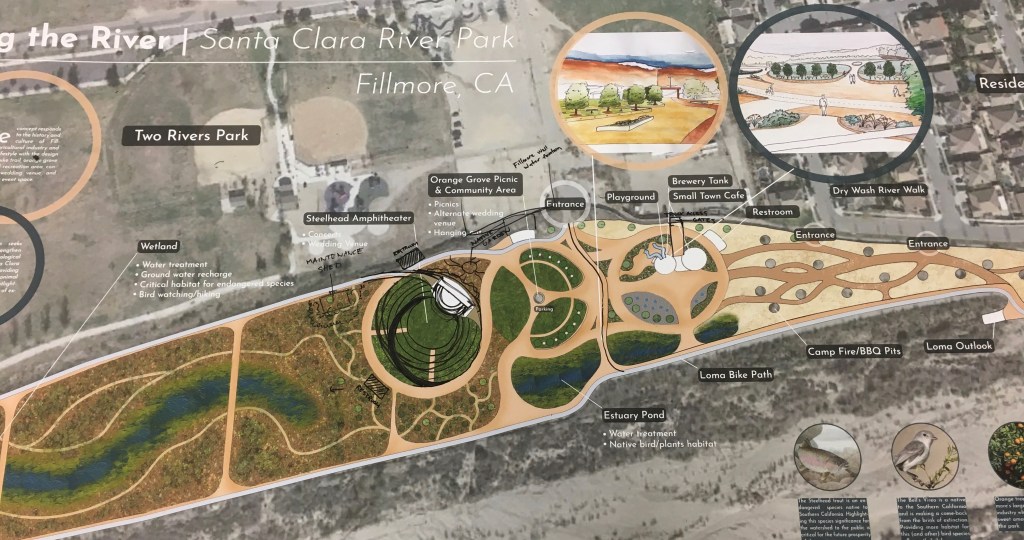
As I near the end of the process of designing the new Santa Clara River Park in Fillmore, I am challenged with designing a plant palette that will suit the ecology of the region and make visitors feel welcome. The topic of planting design is another key issue in the broader discussion of sustainable landscapes, which can have far reaching effects on animal life and soil health. In my blog post today I will be discussing native plants and their role in creating a sustainable landscape, and will give you a glimpse into the new plant palette for Santa Clara River Park.

There are a ton of benefits to using native plants over exotic or non native plants. For one, they offer an aesthetic that is local to that region that cannot be recreated anywhere else in the world. For me, this is often overlooked or under appreciated. Native plants also offer a host of ecological benefits because they have naturally evolved with native animals and provide a ton of ecosystem food and habitat to these creatures. In California, where water is as sacred and hard to find as God, these native plants require minimal irrigation, are low maintenance, and can process stormwater really well! If that wasn’t awesome enough, native plants also require less pesticides for maintenance because they are adapted to fend off local pests, which means that the public is kept safer from coming into contact with these toxins. 

So now that you know why native plants are particularly awesome to use in planting designs, let me tell you how I am using them in my design of the Santa Clara River Park. The vast majority of my design uses native plants; in the construction of the wetland depressions at the west of the park, and in the native plants garden near the amphitheater. I felt that using native plants was most appropriate in these natural areas because they can provide a significantly large and quality habitat to birds and other animals in the area. Another reason that I used native plants throughout the park is because I want the public to be exposed to these beautiful native plants, to learn about them, and even get the opportunity to learn about how these plants have been used historically for human purposes. While I don’t exclusively use native plants in the park, all of the plants in my palette are chosen based upon their ability to thrive in the climate zone of Fillmore, CA. I hope you will enjoy the plants as much as I have had designing them!

An Indispensable Guide to Planting Design

A Look Inside: The Materials Being Used to Construct Fillmore’s New Park

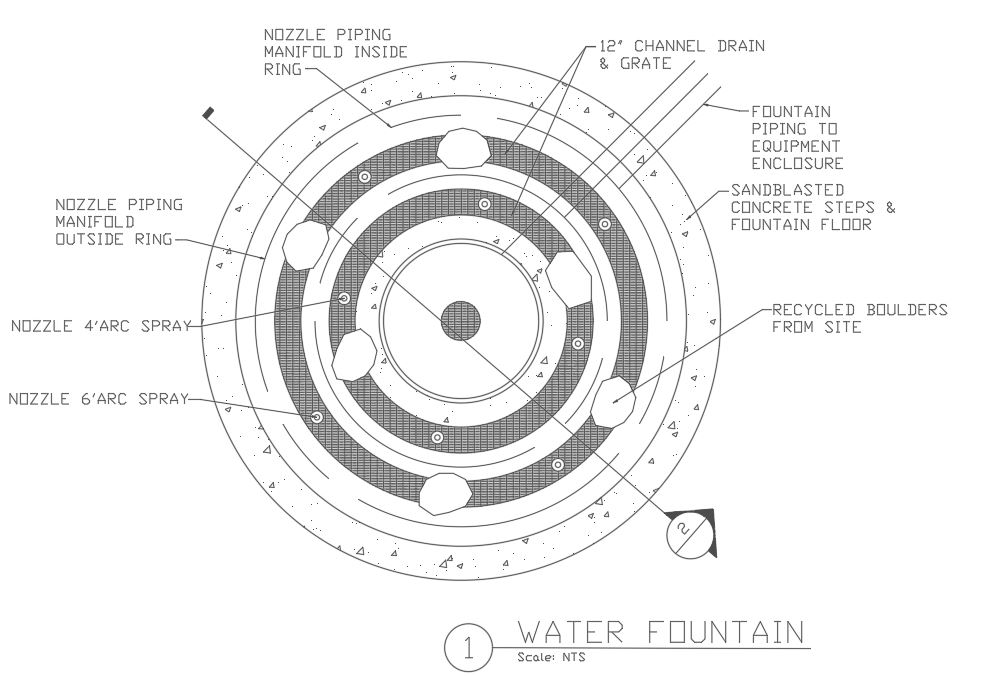
Construction detail of children’s water fountain

There is a strong push in the field of Landscape Architecture to use sustainable materials in our designs, and there are three main reasons why. First, there is a huge, foreboding, giant, ultra-scary and very real climate crisis currently inflicting the planet… we all know that. Second, using recycled and sustainably sourced materials reduces the need and number of landfills and other systems to deal with construction (and destruction) waste. Third, and perhaps surprising to some, using sustainable materials can often be cheaper and therefore economically beneficial to our clients, and in the real world where money is scarce and budgets are tight, this is often the most convincing argument to make. 

My design for the Santa Clara River Park in Fillmore will be constructed using sustainable, recycled, and locally sourced materials. The Professional Practice Network of the American Society of Landscape Architects that deals with sustainable design and development points to four areas of landscape products that have a crucial impact to how sustainable a project is, these are permeable surfaces, reflective surfaces, sustainable woods, and sustainable concretes. I’ll discuss each in relation to my design.

Construction detail of the pier to be built

A large percentage (estimate 50%) of my site is constructed wetland and hiking trails using decomposed granite (i.e. d.g.). D.G. is a highly permeable surface which won’t obstruct the movement of water to recharge into the ground. Moving from hiking trails to concrete paths, my walking paths will be a light tan color which matches the color of the sand from the river and reduce the heat island effect of the park during mid-day hours, making the park more pleasant to be in. While the concrete is not permeable, it will be sourced from local suppliers and designed such that all water that falls within the park boundaries is directed to retention ponds and bioswales which will gradually clean the storm water and allow it to filter through the earth. A number of features on site, most prominently the pier on the estuary pond, will be constructed from sustainably sourced Western Red Cedar trees certified by the Forest Stewardship Council (FSC) which guarantees that the material was harvested using low impact logging techniques. Lastly, a significant attempt will be made to incorporate existing site elements, such as the large pile of granite boulders, into future site amenities such as the amphitheater and child water fountain play area. This park will truly be one of a kind!

Is Fillmore’s Future City Park a Sustainable Landscape? : A Case is Made

The term ‘sustainable’ is used often these days, but what exactly does the term ‘sustainable landscape’ mean, especially in relation to the field of Landscape Architecture? According to the American Society of Landscape Architects (ASLA), a sustainable landscape is one that “reduces long term economic costs associated with a site.”  In order to reduce these long term costs, however, a number of strategies must be employed such as “implementing permeable streets and driveways, bioswales, rain gardens and bioretention ponds.” All together, these strategies amount to an LID or Low Impact Development approach to development because they reduce the overall costs by limiting the quantities of materials needed to make a landscape functional.

For Fillmore CA, the adaptive reuse of post industrial landscapes offers a chance to transform a derelict wastewater treatment plant into an economically viable and productive city park. According to ASLA, “the long-term economic value of a sustainable site can be calculated through a sustainable return on investment (SROI) approach.” This approach seeks to maximize the clients “triple” bottom line: economic, environmental, social. Using these three metrics, I show how my re-design of this site just north of the Santa Clara River meets the “triple-bottom line” benchmark and justifies designation as a sustainable landscape. 

First, my park redesign (henceforth called the Santa Clara River Park) incorporates  multiple opportunities for revenue generation; a local brewery and cafe located inside the two former water tanks, venue space for weddings, markets, and an amphitheater for concerts and theatrical productions. These activities have enormous potential for large economic generation. Second, the Santa Clara River Park embodies a forward thinking approach to storm water management and conservation through its multiple retention ponds, constructed wetlands, and native planting design. Lastly, various social/community networks are incorporated on site including a two lane bike path, rock climbing wall, child playground, BBQ/grilling pits, and wildlife observation experiences. A core principle of my design is to design each area the ability to perform multiple economic, environmental and social functions within the park, increasing its benefit to the community and its sustainability as a landscape. 

Resilient Design for Fillmore’s New City Park

I have recently joined the Sustainable Design and Development Network (SDD) of the American Society of Landscape Architects. The SDD is “committed to ecology-based planning and design and creating landscapes that balance the needs of man and the environment while benefiting both” (ASLA). I decided to join this network because my studio project this quarter looks at ways to adapt and reuse former industrial water cleaning tanks and retention ponds in Fillmore, CA. A core principle of sustainability states that “sustainable development is development that meets the needs of the present without compromising the ability of future generations to meet their own needs” (ISDD), which means that instead of abandoning old industrial artifacts and relegating them to the landfill, as landscape architects, we should incorporate them into future developments as much as possible. Adaptive reuse is an ever increasingly popular form of development that focuses on reusing and recycling previous objects and materials into wholly new contexts with new meanings for the community. 

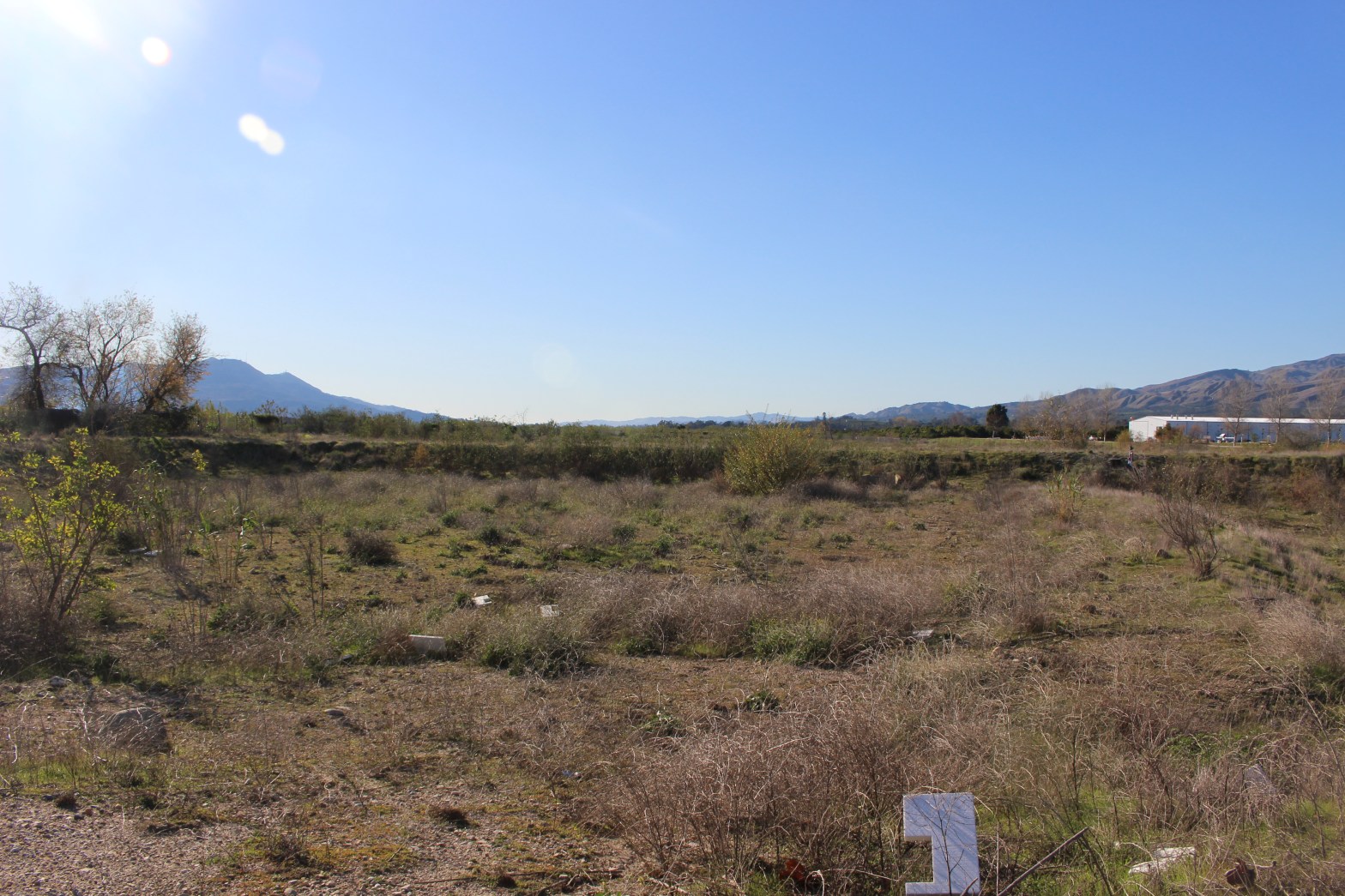
A resource on sustainable design and development that I found on SDD was an article on resilient design. It stated that “the goal of resilient landscape planning and design is to retrofit our communities to recover more quickly from extreme events, now and in the future” (ASLA) because of threats posed by climate change and natural disasters. This reminded me of the flood that rocked Fillmore in 1928 killing more than 400 people after a dam burst miles upstream. Whether a dam burst, torrential rain, rising sea levels or a tsunami (for towns by the coast), flooding is “the most frequently occurring natural disaster globally” (ASLA). My project site in Fillmore is not immune to flooding either, since it is located on the north bank of the Santa Clara River. Because the project site has multiple retention ponds capable of absorbing large quantities of water and a sizable embankment to defend itself from surges of water, the site performs a number of crucial ecosystem services as it sits undeveloped today, including as a rainwater filtration area and partial wetland for some portions of the year. Additionally, these retention ponds should be kept natural just in case the the sites levy one day fails to hold back high levels of water.

Design a site like this with WordPress.com
Get started